
More than six years after starting conversations across the Twin Cities and three years after its formation, Maayanot Community Mikveh of Minnesota has picked the Beth El Synagogue campus as the site where the facility will be built. It will be located on the southwest corner of Beth El’s building in St. Louis Park. Maayanot will renovate an interior space and build an adjacent addition in the hopes of opening its doors in early 2028.
“I had said from the beginning, we weren’t looking for a geographic location,” said Cantor Rachel Stock Spilker, the founder and board chair of Maayanot. “Meaning…we were looking for the site that, literally, would best work physically.”
Maayanot will soon launch a capital campaign with a goal of approximately $3.5 million to construct and begin operating the mikveh.
There were five key requirements that the site exploration committee considered when choosing the location:
- Structurally appropriate for a mikveh pool and collection of natural water according to the specifications of a kosher mikveh
- Accessible to people of all abilities
- Financially feasible
- Easy to reach from a variety of locations
- A modest presence with a private entrance
“The nature of mikveh can be very personal,” Spilker said. “Also, we understood that adding on to another building was the most economical way to go, in the sense that you’re sharing a wall or even an interior space,” which means infrastructure like water and power is already in place.









Although Maayanot will be a tenant of Beth El as opposed to a partner, being on a Jewish campus like Beth El’s was an important consideration.
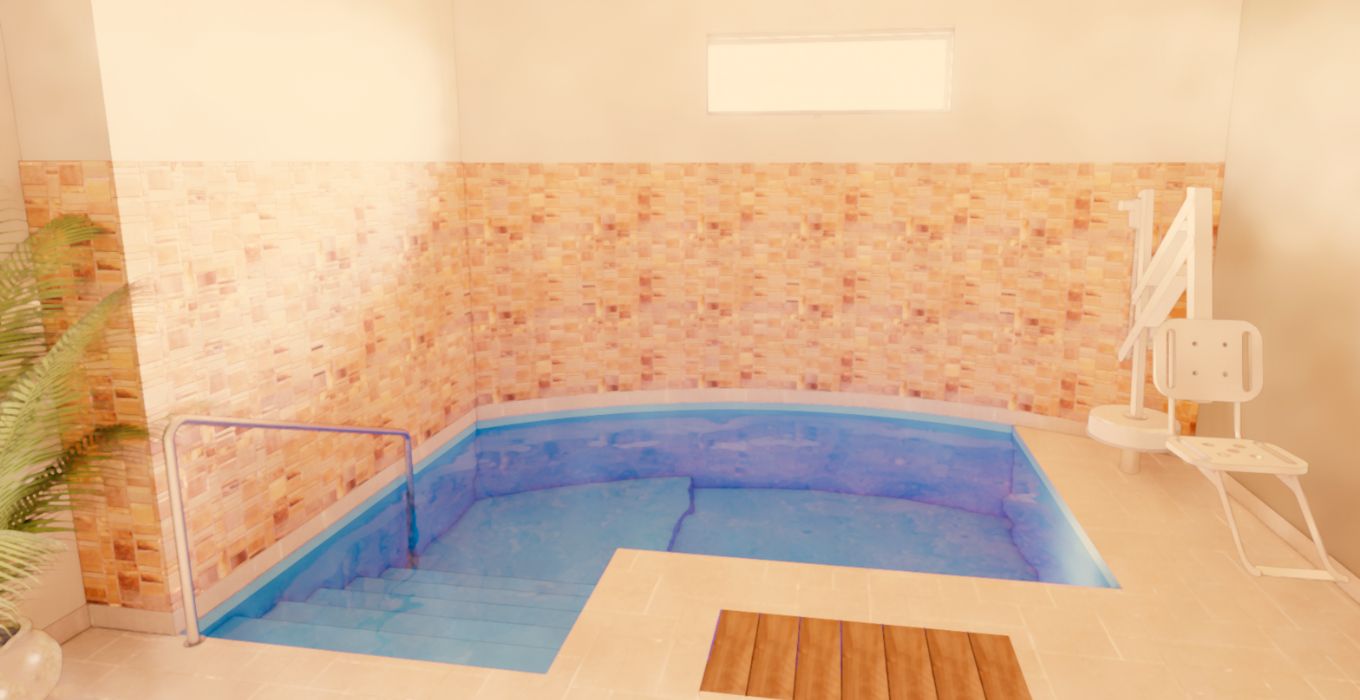
A preliminary rendering of the immersion bath at Maayanot Community Mikveh of Minnesota’s proposed location on the Beth El Synagogue Campus. (Courtesy Maayanot/Miller Dunwiddie Architects)
“At a time when our Jewish community seeks renewal and comfort, reflection and connection, Maayanot arrives as a source of blessing – rooted in ancient tradition yet expressed through an open, inclusive, joyful spirit,” said Beth El Senior Rabbi Alexander Davis. “It will stand as a testament to the spiritual power of water and Maayanot’s inspired vision. We look forward to having this new community mikveh on our campus.”
Said Spilker: “To be tenants of a place that cares about the Jewish community, obviously, and supports our particular vision is only helpful. There’s a synergy here.”
Maayanot is part of the Rising Tide Open Waters Mikveh Network, which aims to inspire, strengthen, and support individuals and communities in opening the doors to the mikveh in a pluralistic, egalitarian way. Being attached to a synagogue but not being a part of the synagogue is something that Spilker has seen elsewhere in the network.
“This is a model we’ve seen in other open mikvaot around the country,” she said. “It’s a model that’s out there that works well.”
Spilker hopes that this will be the end of the site search; about four years ago, the plan was to build at Sholom Home East in St. Paul.
“We were very excited about it, but unfortunately, we ran into some structural issues there that would have increased our cost more than we could’ve handled,” she said. “It was a little bit disheartening. But…this is a long process, and there are twists and turns and we’ve kind of just had to roll with them.”
Maayanot’s history
At an early informational meeting held on Zoom during the pandemic, Spilker was asked how long it would take to get a mikveh operational. She said a year and a half or two. Anita Diamant, who founded the Rising Tide Open Waters Mikveh Network, had other ideas.
“She nodded her head and said maybe 8 or 10 [years],” Spilker reminisced. “But it’s a long process, and people have been hearing about for a long time. It’s a big thing, it’s new, finding a place and teaching people about it takes a long time.”
Spilker’s interest in starting Maaynaot came almost 10 years ago, when she had taken a sabbatical in Boston and was the scholar-in-residence at Mayyim Hayyim, the mikveh that started Rising Tide. The mikveh network was established as a way to bring these new, community mikvaot together – and because Mayyim Hayyim was fielding more questions than they had the bandwidth to answer from organizations looking to start their own mikveh.






Minneapolis’ Heidi Schneider was an early, enthusiastic supporter of Maayanot and the idea of an open mikveh, because of the experience she had when she was going through her conversion to Judaism – which is culminated with a mikveh visit.
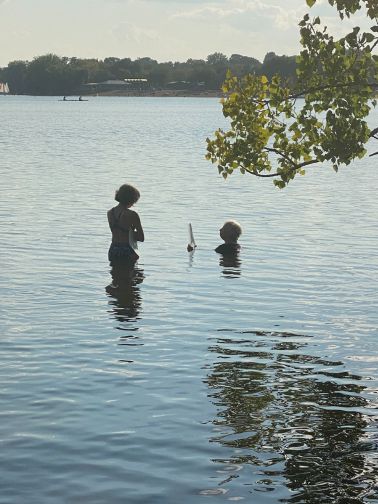
Two women in Cedar Lake during a 2023 Maayanot immersion event. (courtesy)
“It was so disappointing to me because I had expected it to be much more than it was, and considering the significance of the moment to me, it felt disappointing and utilitarian,” she said. “I had wanted and expected the Mikveh experience to be transformational. It was on some level a transformation, but not transformational. Nothing about it was really special except it was a necessary step for me to become Jewish.”
The second time she felt she needed to go the mikveh – which was unavailable to her at the time – was when she had suffered a series of pregnancy losses.
“I was devastated. I don’t know where the idea came from, but I really felt like I needed to go back to the mikveh to do a reset,” she said. But when she called and told the person why she wanted to use the mikveh, Schneider said the conversation ended and she didn’t get a call back. “We’re talking about a mikveh as a utilitarian thing to fulfill certain types of Jewish rituals, and rituals outside … traditional norms, not so much.”
Part of the goal of the open mikveh movement is to expand why people would want to immerse.
“We want everybody to be welcome,” said Bob Karasov, a Maayanot board member. “One of the other things that drew me to it is that it’s all about inclusiveness. One of the things that I don’t like about the Jewish community is, sometimes, how segregated we are. This is so inclusive, both cities, all movements.”
Bob Mast, a Mount Zion member in an interfaith marriage, took his then 2 ½ year old and six-month-old, and found the experience less-than-memorable. Thanks to his connection with Cantor Spilker, he has been a regular participant at the immersions that Maayanot has been doing over the last several summers at lakes in the Twin Cities, and he’s seen that there are so many opportunities for people to go to a mikveh.
“Whether it’s immersing because you just got a new job, or immersing because you just got fired from a job,” Mast said. “It’s just is a whole new way of looking at the mikveh of experience that I could see clearly was going to be really beneficial for our community.”
Schneider, a former president of Adath Jeshurun Congregation, said she approached Rabbi Harold Kravitz about the need to build a mikveh that was more community-oriented in the early 2000s. She said she was rebuffed by the people she pitched the idea to because they though the mikveh was only for purposes of family purity (women immersing at the end of their periods), or people converting.
“I realized I had this ritual passion that was not broadly shared,” Schneider said. Fast forward nearly 20 years, and having a lunch meeting with Spilker, Schneider broke down in tears when she heard the Maayanot vision.
“This was fulfilling a possibility that I had believed was not feasible, that it couldn’t be done,” Schneider said. “There’s so many possibilities to enrich milestones in a Jewish way, through immersion, and to change the gatekeeping so that other kinds of milestones would be honored.”
Maayanot Community Mikveh announced in February that it forged an agreement with the St. Paul Mikvah to facilitate the ritual bath immersions for the next year. Starting on Feb. 18, Maayanot began taking on the scheduling and attendant duties for immersions during the daytime. The agreement was made with the backing of both the Minneapolis and St. Paul Jewish Federations, which are also supportive of this next step.
“We know this new space will quickly become an indispensable part of Jewish life here in Minnesota, enriching our entire community for generations to come,” said David Kaplan, CEO of the St. Paul Jewish Federation. “We wish Maayanot and our entire Jewish community a hearty mazal tov on reaching this milestone.”
Said MJF CEO Jim Cohen: “Maayanot’s work directly supports our goal of ensuring a thriving and vibrant Jewish community. May they go from strength to strength as they create a mikveh with welcoming and belonging at its core.”
What are the requirements of a mikveh?
Part of Rising Tide’s network is Mayim Rabim, a community mikveh in Des Moines, Iowa, where Schneider’s husband, Joel Mintzer, is from. The mikveh there is connected to a Conservative synagogue, like Maayanot will be, and it offers everything Schneider wished she had when she converted, and she’s used it to mark many milestones.
“I used it after my mother’s death, my last parent to die, so I had become then the matriarch of the family,” she said. “I did a ritual immersion when my first son got married and when my second son got married. And I did it again when I became a grandmother. And so this is exactly what I think this can offer people.”
However, when she wanted to immerse right after Mayim Rabim was set to open in Des Moines, she couldn’t. It was a dry summer in central Iowa with and it hadn’t rained enough.
A mikveh is kosher for use when nearly 200 gallons of rainwater or some sort of natural source is collected.
“Everything from the structure to collecting water has very specific requirements,” Spilker said. “There are so many rules.”
The mikveh has to be built into the ground, and some of the water that has been captured is siphoned into the immersion pool, which is filled with treated water.
“Every time someone immerses, you have to let in a little bit of the mayyim hayyim, the living water, in,” Spilker said. “It needs to be hygienic. And the requirement is not that the whole thing is made up of the fresh water. You just have to have some of it in there.”
‘Reclaiming’ mikveh
Maayanot Mikveh Attendant Rebekah Jacob lived in California when she converted to Judaism, and immersed in the Pacific Ocean to complete her conversion. She went through the Mayyim Hayyim mikveh guide training program and is excited to help lead people in St. Louis Park.
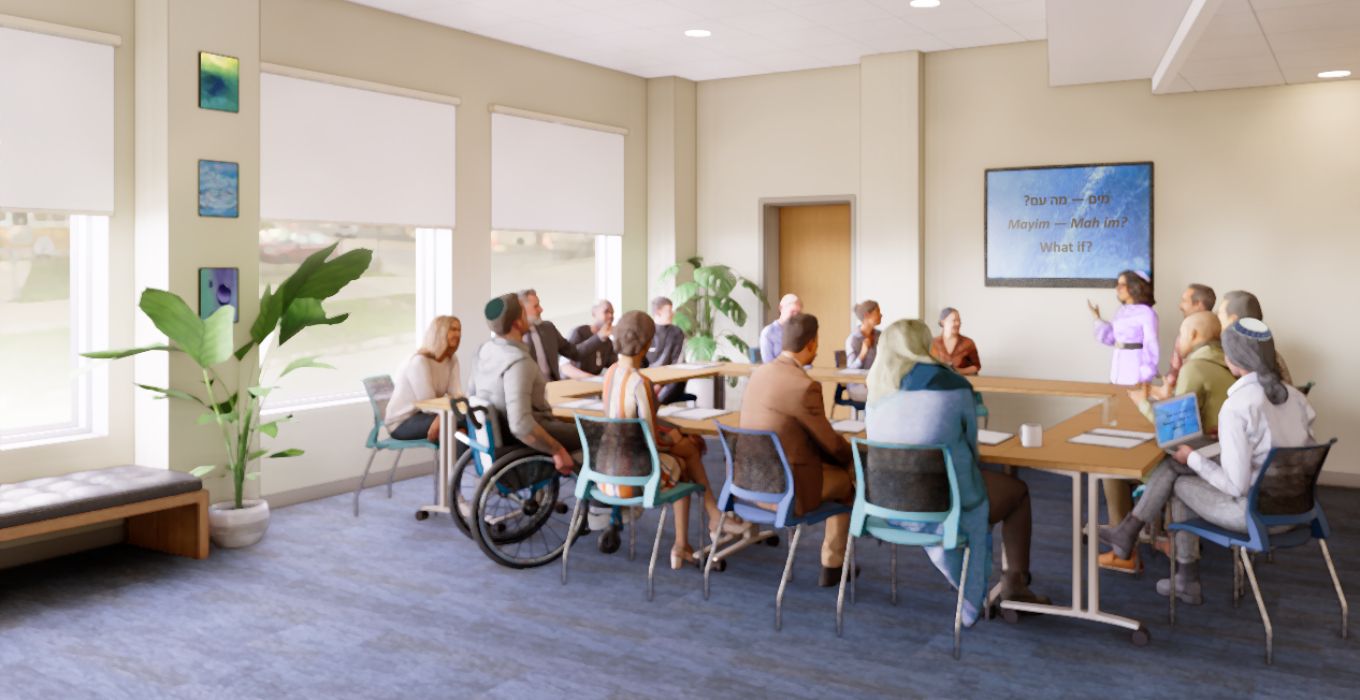
The preliminary rendering of a classroom exterior of Maayanot Community Mikveh of Minnesota’s proposed location on the Beth El Synagogue Campus. (Courtesy Maayanot/Miller Dunwiddie Architects)
“It is really a remarkable ritual,” Jacob said. “It is sort of entering into a liminal space and connecting with whatever it is beyond you that you are wanting to connect with, and finding a moment of renewal and transformation in that time.”
The guide training that Jacob completed is an eight-week online class. Lessons are asynchronous, but you have a chevruta – learning partner – to go have discussions with.
“The classes themselves are really interesting,” she said. “It’s sort of a combination of rabbinic texts about mikvah, learning about the movement to reclaim mikveh as a transformational opportunity, and how other mikvaot are experiencing having these new, reclaimed, renewed versions of mikveh in their communities.”
Karasov, who is also a retired pediatrician and mohel, in addition to being on the Maayanot board, empathized with those who didn’t have the most positive experience at the mikveh.
“How can our organizations and institutions welcome people and make people feel welcomed and embraced?” Karasov asked. “I know a lot of the younger generation doesn’t really belong to any institutions, and this seemed like the sort of ritual that might be attractive to people. People are looking for new ways to find spirituality and meaning. Mikveh is an ancient ritual, but it really speaks to, I think, the modern sensibilities of using water, having ritual cleansing, purification, new beginnings.
“When I saw what was happening around the country with open mikvaot, and I saw Mayyim Hayyim in Boston and how successful they were. It just seemed like a good project to try to get involved in to try to bring people back to Judaism.”
Karasov said that people find being in the water meditative, whether they are trying to mark a milestone or work through an issue they may have.
“Mayyim Hayyim developed a lot of different readings and prayers for different occasions,” he said. “Other people will write something themselves to read. What you bring to it is what you get out what you get out of it.”


How wonderful! Mazel tov!