Esther, me and the “I word”
I was seeing someone who wasn’t Jewish, though it had not been my intention to get involved. In fact, I tried hard not to—as Esther did, centuries ago. Perhaps she and I had something in common. Or did we?
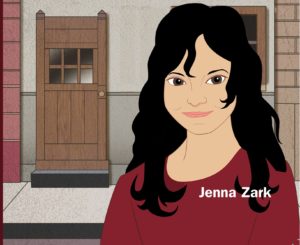
Contributing writer Jenna Zark is a local Jewish playwright whose plays have been produced at Circle Repertory Company, Illusion Theater, History Theatre, Minnesota Jewish Theatre and elsewhere. She also provides communication services to businesses and nonprofits. More information is at www.jennazark.org.
I was seeing someone who wasn’t Jewish, though it had not been my intention to get involved. In fact, I tried hard not to—as Esther did, centuries ago. Perhaps she and I had something in common. Or did we?
We are alive, Josh and I, like the fruits of Jerusalem. The trees, figs, noise and clatter tell us we are alive, and we cannot take it for granted.
It sits on my shelf, a poor relation to the stone menorah with its carvings of children holding up our candles every Hanukkah. THAT menorah is weighty with memories. THAT menorah is staying home.
So God shows up and asks if you want 613 Laws. The Jews took all of them. According to the story, they did not ask why. But if ancient Jewry was anything like my relatives, I’ll never believe it. The Jews I know would never settle for anything without asking why.
Like the house Anne Frank lived in when she and her family were in hiding from the Nazis, Sukkot is a secret holiday, translated literally, as booths. Sukkot is a pilgrim’s holiday, honoring those who wandered forty years in the desert and those who made arduous journeys to the holy temple of Jerusalem while living in temporary dwellings along the way. A symbol of life’s fragility, it is made of branches and beams with ample space for the intrusions of sun and rain.